College for All Jubilee School: Moving Towards Solutions
This session will kick off the second half of our College for All series as we move into a discussion of solutions to the problems we discussed in the first half. Join us as Marshall Steinbaum discusses his paper “Rebuilding American Higher Education: From an Engine of Inequality to a Pillar of the Public Interest.” This paper, published by Higher Ed Labor United (HELU) and the Jain Family Institute, proposes a wholesale makeover of the US higher education system to operate in a pro-social manner, which in effect requires a DNA transplant relative to the expensive, highly segregated, and hierarchical system that underlies so many of the system’s problems.
- To counteract institutional segregation and the tuition-driven inequality it depends on, public institutions should receive direct federal funding on the condition they offer a free, high-quality undergraduate or technical degree to every academically-qualified student in their geographic catchment area, while being prohibited from out-of-state recruiting, price discrimination among admitted students, and front-loaded financial aid.
- To replace the current model of privatized financing through underwater student lending—roughly $100 billion originated annually, of which CBO projects about seventy percent will never be repaid—we redirect those federal dollars, along with research overhead currently tied to individual grants, into direct institutional support that pays for the free-college entitlement without requiring new revenue.
- To reverse the erosion of academic labor, we propose a single-stream career structure (graduate student, postdoc, junior faculty, senior faculty) with collectively-bargained pay scales, equal labor-organizing rights for workers at public and private institutions through amendments to the NLRA and interstate compacts, and statutory protections for academic freedom.
- To end plutocratic governance, private donors are barred from boards, which must instead include faculty, staff, student, and public representation, with the Department of Education serving as a sectoral regulator in place of the captured accreditation system.
- And to restore knowledge creation as a public good, federal research funding is redirected away from the Bayh-Dole commercialization pipeline and toward open, mission-driven national priorities like climate resilience and public health.
Finally, because incumbent institutions and their plutocratic boards have historically been the most effective opponents of free-college reform, we propose a federally-chartered university system operating across many campuses nationwide as a “public option” — built from financially-distressed institutions that opt in, from elite institutions that forfeit their independence by capitulating to political extortion, and from new campuses in underserved areas. Its purpose is to discipline the rest of the sector toward equity and quality, ensuring that reform proceeds with or without the cooperation of the existing actors who created the monster in the first place.
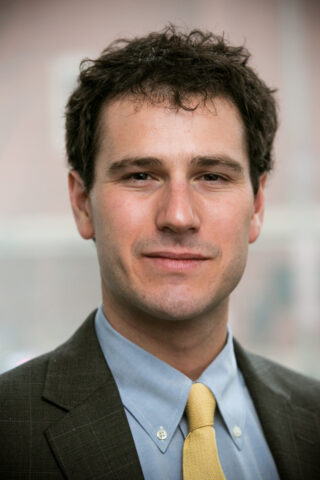
- Marshall Steinbaum is an Assistant Professor of Economics at the University of Utah and a Senior Fellow in Higher Education Finance at Jain Family Institute. He is an empirical labor economist by training, and his research investigates the existence and implications of employer power in labor markets, with applications to antitrust, higher education, and student debt. In addition to his academic research, he has written for a number of popular outlets relating to his expertise in inequality, antitrust, labor markets, the history of economic ideas and intellectual history more generally, student debt and higher education policy, as well as book reviews related to those subjects.
This session is a part of the larger Jubilee School: College for All series.
Speaker:
Marshall Steinbaum